

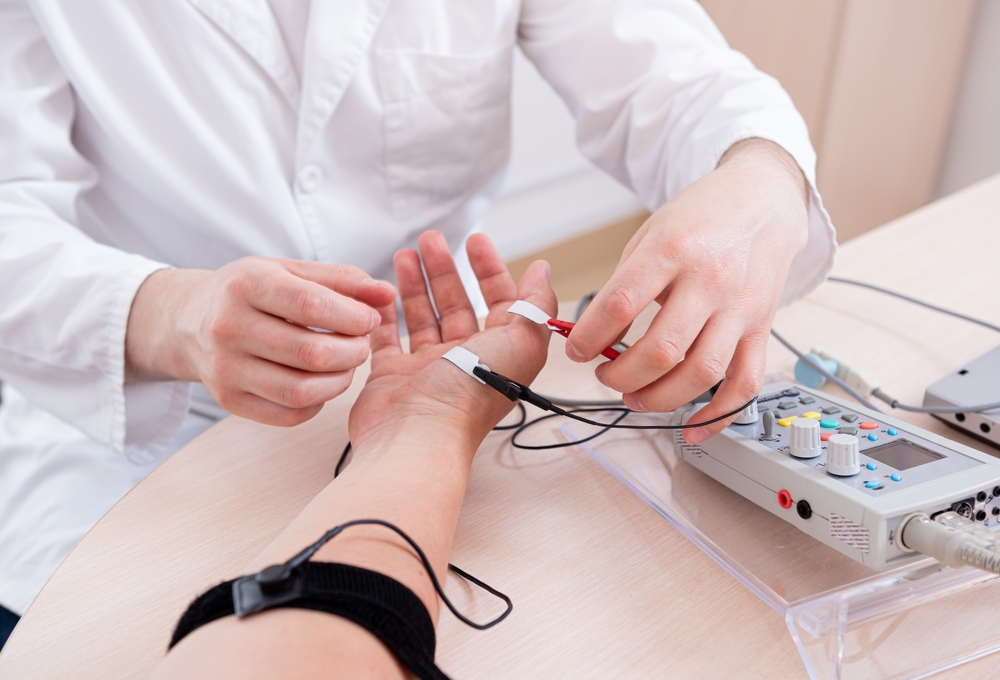
An EMG test, or electromyography, is used to evaluate how well muscles and the nerves that control them are working. It helps physicians determine whether symptoms are more likely coming from a nerve problem, a muscle disorder, or an issue with how nerves and muscles communicate. EMG is often performed along with nerve conduction studies to provide a more complete picture.
Why an EMG May Be Recommended
An EMG test may be recommended when a patient has symptoms such as numbness, tingling, weakness, muscle cramping, or pain that may be related to nerve or muscle dysfunction. It is commonly used when symptoms suggest a pinched nerve, peripheral nerve injury, or another neuromuscular problem that needs a more precise diagnosis.
Conditions an EMG Can Help Diagnose
EMG testing is often used to help diagnose or evaluate conditions involving the nerves and muscles. These can include radiculopathy, peripheral neuropathy, carpal tunnel syndrome, muscle disorders, and problems affecting nerve-to-muscle signaling. It can also help identify the location and extent of nerve or muscle injury.
What EMG Can Show Your Doctor
One of the biggest benefits of EMG testing is that it can help narrow down the cause of symptoms that may otherwise be difficult to explain. The test can show whether a muscle is receiving normal nerve signals and whether a nerve may be damaged or irritated. That makes it useful when deciding on the next steps in treatment planning.
Common Symptoms That May Lead to EMG Testing
Your doctor may consider EMG testing if you are experiencing:
Muscle weakness
Numbness or tingling
Radiating arm or leg pain
Muscle cramping
Unexplained loss of muscle function
These symptoms can have different causes, which is why targeted testing can be an important part of the diagnostic process.
EMG as Part of a Bigger Diagnostic Picture
An EMG test does not usually stand alone. It is often combined with a physical exam, symptom review, imaging, and nerve conduction studies to help form a more complete diagnosis. Rather than simply confirming that something feels wrong, EMG can help identify what kind of nerve or muscle issue may be present and how severe it may be.
When to Talk to a Specialist
If you have ongoing numbness, weakness, or nerve-related pain, an EMG test may help clarify the cause and guide treatment. Jacob T. Rohrs, M.D. offers electromyography as part of his services in Scottsdale. For more information, contact Jacob T. Rohrs, M.D. in Scottsdale, Arizona by calling (808) 645-4080 or visiting 7242 E Osborn Road #420, Scottsdale, AZ 85251.


